

In 1937, the anthropologist E.E. Evans-Pritchard published a study of the Azande people of Central Africa that changed the way the Western academy understood witchcraft. The Azande did not treat witchcraft as superstition. They treated it as a theory of causation. When a granary collapsed and killed someone, the Azande understood perfectly well that termites had eaten the supports. They did not dispute the physical cause. What they wanted to know was why this granary, why this person, why today. Termites eat many granaries. Most collapses do not kill anyone. The coincidence that placed this person under this structure at this moment required a different kind of explanation — not physical but intentional. Someone had willed this. Someone in the community, someone who knew the victim, someone whose malice had operated at a distance, invisibly, through channels the physical world could not account for.
The Azande were not confused about mechanics. They were running a social threat-detection system that operated on a different plane than engineering. The question was not how the granary fell. The question was who wanted it to.
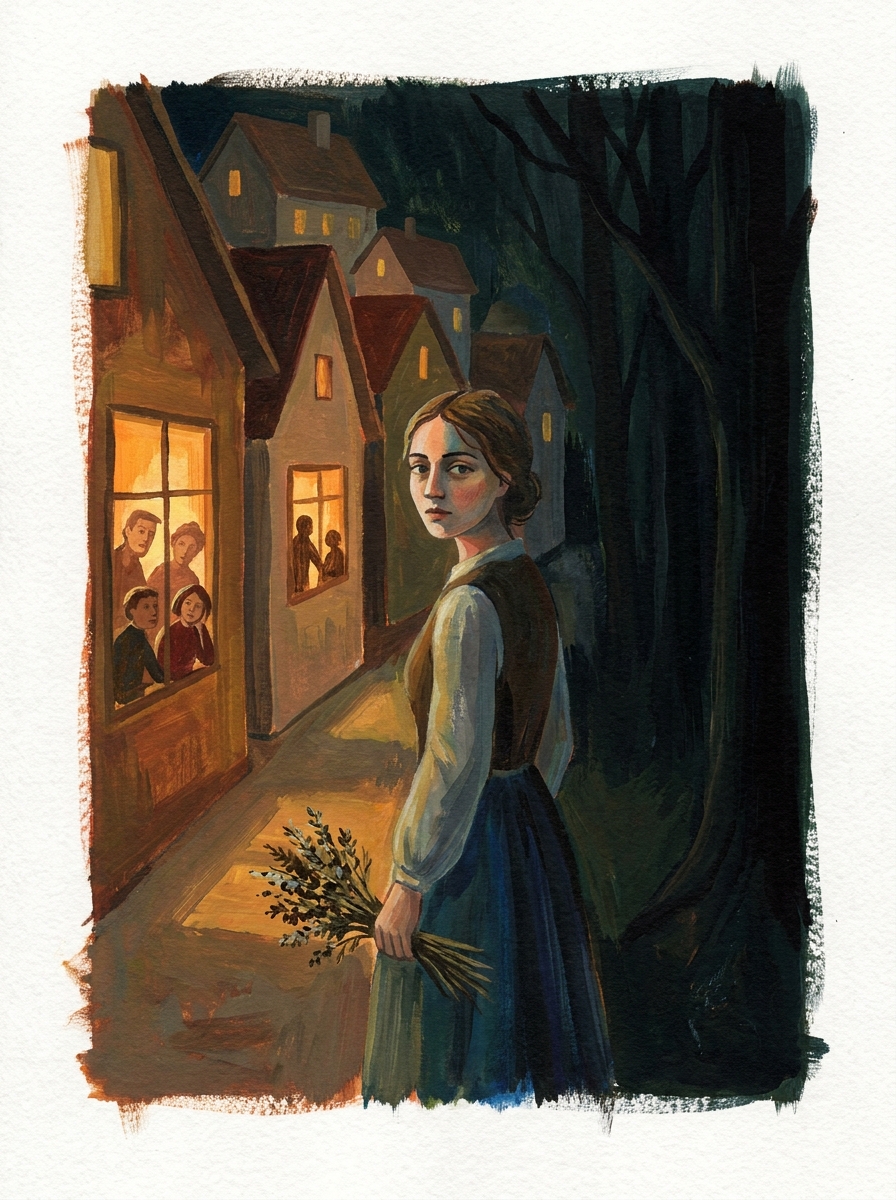
This is the witch's territory. Not the woods, not the cave, not the castle on the hill — the community. The witch is the figure for harm that comes from inside, at hands you cannot easily accuse, through channels you cannot easily trace. She is your neighbor. She knows your name, your children's names, the layout of your house, the history of every grievance between your family and hers. She does not need to break in. She is already in. And the harm she does is not the harm of the predator or the invader — it is the harm of proximity, of intimacy turned toxic, of someone who has access to your life because the social order placed her there.
The cognitive seam underneath is in-group threat detection, and it operates in a register the other figures on this list do not reach. The ghost is in the room, but it is a visitor from outside the living world. The shapeshifter is a deceiver, but it is disguised — once the mask falls, the threat is identified and the community can act. The witch is neither visiting nor disguised. She is a member of the community in good standing, and her power operates through social channels — envy, resentment, gossip, the slow accumulation of grievance — that the community cannot excise without tearing itself apart. To accuse the witch is to accuse your neighbor. To prove the accusation is to admit that the social order you depend on contains someone who is using it as a weapon.
Jennifer Freyd's research on betrayal trauma helps explain why this particular variety of threat is processed differently than all the others. Freyd demonstrated that harm inflicted by a trusted insider — a parent, a partner, an institution that holds power over you — produces a distinct psychological response: not fight-or-flight, but a kind of enforced blindness. The victim often fails to register the betrayal, not because the evidence is hidden but because acknowledging it would sever a relationship the victim depends on for survival. The mind suppresses the detection rather than act on it. This is not weakness. It is the rational calculation of an organism whose survival depends on social bonds and whose social bonds include the person doing the harm.
The witch exploits this architecture. She does harm from inside a relationship the community cannot afford to sever. The neighbor's envy, the elder's resentment, the quiet woman at the edge of the village whose knowledge of herbs and remedies gives her a power that the patriarchal order did not authorize — these are threats the community can see, in some peripheral way, but cannot act on without costs that exceed the harm. To accuse is to fracture. To ignore is to suffer. The witch sits in the gap between those two options, and the gap is where the figure lives.
This is why witch-belief, across cultures, functions less as a theology and more as a social thermostat. It rises when social tensions rise. It falls when they fall. Keith Thomas, in his magisterial 1971 study Religion and the Decline of Magic, showed that English witch accusations peaked during periods of economic stress and social dislocation — the enclosure of common lands, the dissolution of the monasteries, the breakdown of the medieval charity networks that had once bound communities together. The accusations were not random. They followed a pattern Thomas identified with precision: the accuser was typically someone who had refused a request for aid from the accused — denied her food, turned her away from the door — and subsequently experienced misfortune. The accusation was, at its root, a projection of guilt. The accuser had violated the social contract. The misfortune that followed felt like punishment. The witch was the figure who made the punishment legible — who gave the guilt a face and the misfortune a cause.
But the figure is not only a projection. This is where the analysis has to hold two things at once, and where most treatments of the witch fail by choosing a side.
One side says the witch is entirely a social construction — a scapegoat, a victim of patriarchal anxiety, a woman punished for existing outside the narrow channels of acceptable female power. This reading has real evidence behind it. The accused in Salem were disproportionately women who owned property, contested wills, or occupied social positions that made male neighbors uncomfortable. The European witch craze of the fifteenth through seventeenth centuries killed an estimated forty to sixty thousand people, the overwhelming majority women, in a campaign that Silvia Federici has persuasively argued was inseparable from the consolidation of capitalist labor relations and the subjugation of female reproductive autonomy. The witch, in this reading, is not a figure of hidden harm. She is a figure of illegitimate accusation — the template a frightened community reaches for when it wants to destroy someone it cannot control.
The other side — less popular in the academy, more durable in the cultures that produced the figure — says the witch encodes a real threat. Not a supernatural threat, but a social one: the truth that people within communities do cause harm, that some of that harm is intentional, and that the mechanisms of harm — envy, gossip, social sabotage, the slow poisoning of reputation — are genuinely difficult to detect and almost impossible to prove. The Yoruba àjé — powerful women, feared and respected, whose abilities include the capacity to harm or heal through means the community cannot fully see — are not understood within Yoruba culture as scapegoats. They are understood as possessors of a real power that demands real vigilance. The Filipino aswang, who is by day a quiet neighbor and by night a creature that feeds on the vulnerable, encodes not a patriarchal fantasy but a genuine anxiety about the person next door — the one who smiles in daylight and operates differently when no one is watching.
I think both readings are correct, and I think the figure's power depends on holding them together without resolving the tension. The witch warns about hidden harm from within. The witch also provides a template for persecuting anyone the community wants to expel. Both of these are real functions. Both have historical evidence behind them. The figure cuts both ways, and the writer who reaches for the witch must decide which edge to sharpen — but cannot afford to pretend the other edge does not exist.
Baba Yaga, in the Slavic tradition, embodies this duality with an honesty that most Western adaptations have abandoned. She is a child-eater who lives in a house on chicken legs, surrounded by a fence of human bones. She is also a source of wisdom, a figure who helps the protagonist when the protagonist approaches her correctly — with respect, with courage, with the right questions asked in the right order. The Baba Yaga story is a test. The figure is dangerous because she has power. Whether the power destroys you or aids you depends on how you meet it. This is not the sanitized witch of the Disney villain or the Wiccan goddess. It is the witch as she was originally understood: a figure of genuine power, genuinely dangerous, whose danger is inseparable from her utility.
The Gullah boo hag of the American Lowcountry works on the same principle, with a specifically domestic charge. The boo hag is a witch who sheds her skin at night and rides the sleeping, draining their energy while they lie paralyzed. She is not a stranger. She is a woman in the community — often an older woman, often someone whose social position is ambiguous. The boo hag does not invade from outside. She enters because the victim left a door open or a window unlatched — a metaphor so transparent it barely qualifies as metaphor. The harm comes through an opening the victim could have closed.
For the writer, the witch story turns on a single variable: proximity. The horror is that the harm has a face you know. A stranger who wishes you ill is an enemy, and enemies are frightening but manageable — you can build a wall, post a guard, identify and confront the threat. A neighbor who wishes you ill is something else entirely, because the tools you would use against an enemy — accusation, confrontation, exile — destroy the social fabric you both depend on. The witch story is always, at bottom, a story about the cost of community. The cost is that the people closest to you are also the people best positioned to harm you, and the harm they do is the kind you cannot easily name.
The choice the writer faces — whether to write the witch as a figure of hidden harm or a figure of unjust accusation — determines the moral weather of the story. Accusatory cultures produce one kind of witch narrative: the righteous uncovering of hidden evil, the community purified by the expulsion of the guilty. Trusting cultures produce another: the tragedy of false accusation, the innocent destroyed by suspicion. Neither is more correct than the other. Both are true. The figure exists to hold the tension between them, and the writer who resolves the tension — who commits fully to one reading and dismisses the other — has written a simpler story than the witch deserves.
The witch protects against two things at once: unseen social harm, and the mob that forms when the social harm is named. She is the warning that the community contains people who wish you ill, and she is the warning that the accusation of ill-wishing is itself a weapon. To lose either edge is to lose the figure. To keep both is to sit with a discomfort the species has been sitting with for as long as humans have lived close enough to hurt each other — which is to say, forever.
The mouth at the edge of the village is speaking. It might be warning you. It might be cursing you. It might be doing both at the same time, and the inability to tell the difference is exactly where the figure does its work.
When a granary collapsed and killed someone in a Central African community, the Azande people didn't doubt the physical cause. They knew termites ate the supports. They understood gravity.
What they wanted to know was: why this granary, why this person, why today? Termites eat lots of granaries. Most collapses don't kill anyone. Someone had willed this. Someone inside the community.
That's the witch's territory. Not the woods, not the castle. The neighborhood.
The Threat From Inside
Every other monster attacks from outside. The ghost visits from the dead. The vampire preys from the shadows. The ogre waits beyond the wall. The witch is your neighbor. She knows your name, your kids' names, the history of every grudge between your families.
She doesn't need to break in. She's already in. And the harm she does isn't the harm of a predator — it's the harm of proximity. Envy. Gossip. Social sabotage. The slow poisoning of a reputation through channels the community can't easily police.
What makes this worse is that your brain handles insider threats differently than outsider threats. Research on betrayal trauma shows that when harm comes from someone you depend on — a parent, a partner, someone your survival is tied to — your mind often suppresses the awareness rather than act on it. Not because the evidence is hidden, but because acknowledging it would break a relationship you can't afford to lose.
The witch sits in that gap. She does harm from inside a relationship the community can't afford to sever.
The Double Edge
Here's what most people get wrong about the witch: they pick a side.
One side says the witch is a scapegoat. A woman punished for existing outside the rules. The accused in Salem were often women who owned property or contested wills. The European witch craze killed tens of thousands, mostly women. In this reading, the witch isn't a figure of hidden harm. She's a figure of unjust accusation.
The other side — less popular in universities, more durable in the cultures that produced the figure — says the witch encodes a real threat. People within communities do cause harm. They do act on envy. They do sabotage quietly. And the tools for detecting this kind of harm are genuinely limited.
Both readings are correct. The witch warns about hidden harm from within. The witch also provides a template for persecuting anyone the community wants to expel. The figure cuts both ways, and losing either edge means losing the figure.
The Same Figure, Different Dress
The Slavic Baba Yaga is a child-eater in a house on chicken legs. She's also a source of wisdom for anyone who approaches her correctly. She's the witch as a test: dangerous because she has power, and whether that power destroys you or helps you depends on how you meet it.
The Filipino aswang is a quiet neighbor by day and a predator by night. The Yoruba àjé are powerful women — feared and respected, not just one or the other. The Gullah boo hag sheds her skin at night and drains the sleeping. She enters through openings the victim could have closed.
These aren't interchangeable. Each carries specific cargo about gender, power, and belonging. But they share a structure: someone inside the community has hidden power, and the community can't easily decide whether that power is a gift or a threat.
What the Witch Protects
The witch protects attention to harm from within — and attention to the danger of accusation. She is the warning that your community contains people who wish you ill. She is also the warning that the accusation of ill-wishing is itself a weapon, and that the mob that forms around it can be worse than the harm it claims to address.
Both edges are real. Both have cost lives. The figure exists to hold them together without resolving the tension.
The mouth at the edge of the village is speaking. It might be warning you. It might be cursing you. The inability to tell the difference is exactly where the figure does its work.