

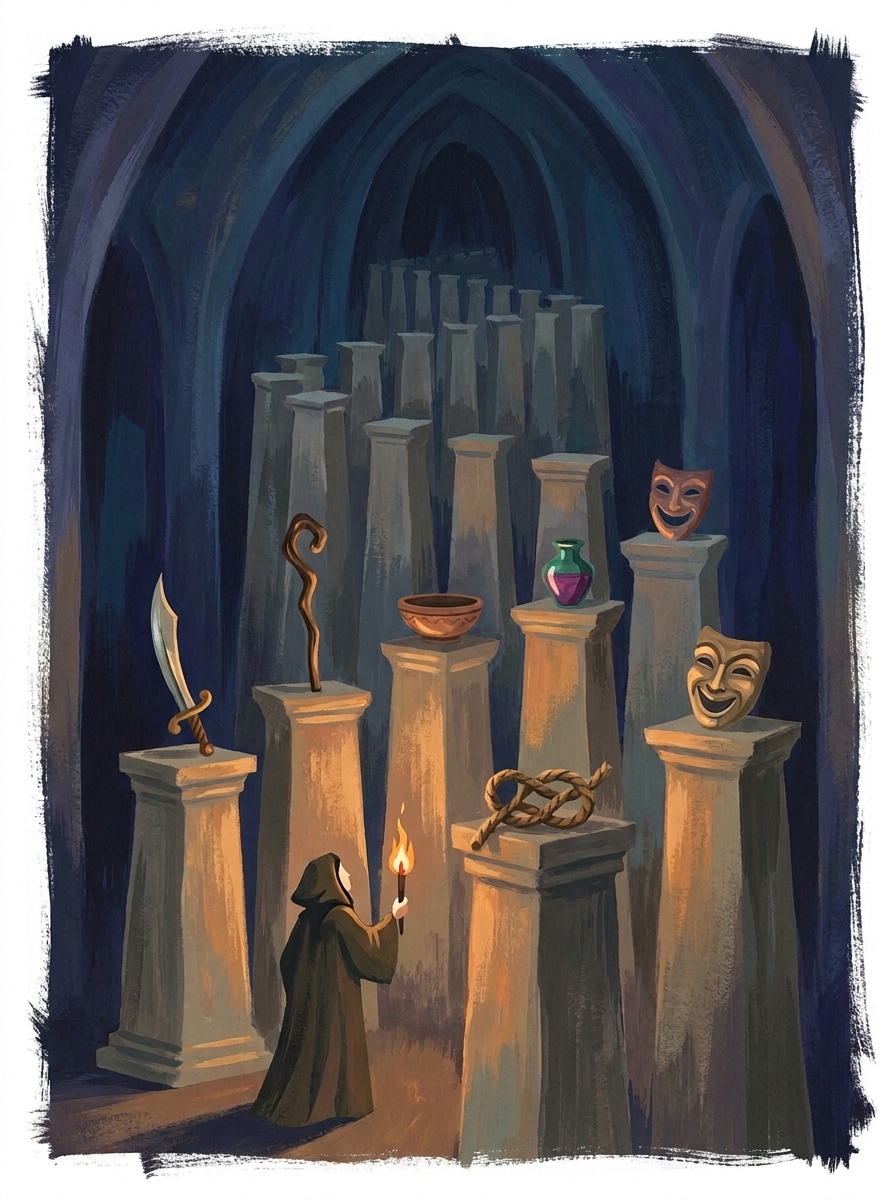
Every culture that has ever existed has had heroes. Not every culture has had writing, or agriculture, or the wheel. But every culture, from the smallest band of hunter-gatherers on a Pacific atoll to the largest empire that ever administered a continent, has elevated certain people above the rest and said: be like that one.
This is not an accident. It is a feature of the species.
The brain comes equipped with machinery for detecting prestige. Joe Henrich, the evolutionary anthropologist at Harvard, draws a hard line between two forms of social deference: dominance, which is submission to someone who can hurt you, and prestige, which is voluntary attention toward someone who knows something worth learning. The two have different neural signatures, different behavioral profiles, different evolutionary origins. Dominance makes you flinch. Prestige makes you watch. Both are ancient. Both are automatic. And both produce hierarchies.
Heroes are what happens when prestige detection scales up. The individual you watch because they hunt well, heal well, speak well, or fight well becomes, through story and repetition and the species's extraordinary talent for imitation, a figure that outlives the person who inspired it. The hero is prestige made permanent. The shape endures after the body is gone.
This series investigates the shapes.
Not specific heroes. Not whether Achilles was admirable or whether Gandhi was flawed or whether your culture's founding figures deserve the pedestals they stand on. Those are important questions, but they are downstream of the one this series asks: why do the pedestals exist at all? What cognitive and cultural machinery produces the slots, and why do the same shapes keep filling them across thousands of years and thousands of miles of separation?
The Same Ten Shapes
Ten figures recur with enough regularity, across enough pre-contact cultures, to qualify as something the species keeps making rather than something any one civilization invented.
The Warrior. The Founder. The Healer. The Underdog. The Trickster. The Sage. The Lover. The Sacrificer. The Renunciate. The Returner.
Not every culture produces all ten. Two of them, the Lover and the Renunciate, appear to require specific cultural scaffolding that not all societies build. But the core shapes, the Warrior, the Underdog, the Founder, the Healer, show up with a persistence that cannot be explained by diffusion or coincidence. The shapes are in the wiring.
The evidence is converging from multiple directions. Children as young as three show preferential attention to figures who help rather than hinder, a finding replicated across cultures by Kiley Hamlin's lab at the University of British Columbia. The over-imitation literature shows that humans copy prestigious models far beyond what is rational, reproducing not just effective techniques but irrelevant gestures, styles, and habits. We don't just learn from heroes. We absorb them. We wear them like clothes we forgot we put on.
Coalition cognition, the system that tracks who would fight for you and who embodies the group's best qualities, provides the social scaffolding. Mortality salience, the awareness of death that Terror Management Theory has spent forty years documenting, provides the existential fuel. Heroes offer what Sheldon Solomon, Jeff Greenberg, and Tom Pyszczynski call symbolic immortality: the chance to participate in something that outlasts the individual life. The warrior who dies for the city lives forever in the city's songs. The founder whose name is on the laws lives as long as the laws hold. The shape borrows permanence from the culture, and the culture borrows meaning from the shape.
What the Shapes Are Not
They are not archetypes in the Jungian sense, if by that you mean metaphysical patterns hovering in a collective unconscious waiting to be downloaded. The substrate is more specific and more testable than that. Prestige detection has been measured in infants. Coalition cognition has been mapped in hunter-gatherer societies. Fairness intuitions have been documented in capuchin monkeys by Frans de Waal's lab at Emory. The machinery is biological, and the shapes it produces are as real as the monsters it produces in the dark.
They are also not a ranking. The order of the series, from the Warrior to the Returner, traces a progression from the most physical and immediate forms of heroism toward the most abstract and transcendent. But this is a descriptive arc, not a hierarchy of value. The Warrior is not lesser than the Sage. The Underdog is not lesser than the Sacrificer. Each shape does different work, and the work is not commensurable.
And they are not pure goods. This is where the investigation gets uncomfortable, and where it has to get uncomfortable if it wants to be honest.
The Cost of the Shapes
Heroes legitimate violence. The warrior tradition, across every culture that has maintained one, romanticizes killing for the right cause and is regularly hijacked to justify killing for the wrong one. The founder cult shores up the regime the founder created, which means every founder story is also a story about who gets to question the founding and who doesn't. The sacrificer provides the emotional template that states use to send people to die. The returner, the rightful king who will come again, underwrites some of the most dangerous political movements in human history, from messianic revolts to restorationist nationalism.
Heroes reinforce hierarchies. They encode in-group preference. They crush ordinary people under the weight of unattainable models. They substitute for actual virtue: knowing the saint's name is not the same as being one, but the knowledge often functions as if it were. They get hijacked for nationalism, for fascism, for propaganda. And in the modern world, they get hollowed out and sold back to us as franchise products, algorithmic role models, and influencer brands that occupy the prestige slot without doing any of the prestige work.
The series treats all of this directly. The honest account is not a footnote. It is half the argument.
Why It Matters
Because the slots don't go away. The cognitive machinery that produces heroes is not optional equipment. It runs in every human society because it is built into every human brain. The question is never whether a culture will have heroes. The question is which shapes it will fill the slots with, and whether it will choose them with any awareness of what the choosing costs.
A culture that loses its warrior tradition doesn't lose violence. It loses the framework that distinguished the protector from the predator. A culture that loses its healer tradition doesn't lose suffering. It loses the figure who stood between the sick and the terrified and said: I have been where the illness comes from, and I brought something back. A culture that hollows its sages into content creators and its founders into brand mascots doesn't escape the machinery. It just fills the slots with figures that can't do the work the slots were built for.
This is the pattern the series traces. Ten shapes. Ten kinds of work. Ten kinds of cost. And the recurring question: what fills the slot when the shape goes cheap?
The Walk
The series moves from the most physical form of heroism to the most abstract.
We start with the Warrior, the figure whose body stands between the group and the threat. We move to the Founder, who builds the structure the warrior defends. The Healer, who walks the boundary between suffering and cure. The Underdog, whose smallness is converted into greatness. The Trickster, who refuses to fight on power's terms. The Sage, whose knowledge becomes right action.
Then the terrain shifts. The Lover, whose heroism is fidelity. The Sacrificer, whose death gives the people meaning. The Renunciate, whose victory is to step out of the contest entirely. And the Returner, the figure whose arrival restores an order that was lost, the shape that carries the species's refusal to let loss be final.
The coda asks what the catalogue reveals. What does it mean that the species keeps making these shapes? What does it cost when the shapes go hollow? And what is at stake in the choosing?
The shapes are durable. The slots remain. What fills them is partly up to us.
The question is whether we keep the choosing serious.
Every Culture Has Heroes. Why?
Every culture that has ever existed has had heroes. Not all of them had writing or the wheel. But all of them picked certain people and said: be like that one.
This isn't random. It's built into us.
Our brains come with systems for spotting people worth learning from. Joe Henrich, an evolutionary anthropologist at Harvard, calls this "prestige detection." It's different from fear. Fear makes you submit to someone who can hurt you. Prestige makes you watch someone who knows something you want to know. Both are automatic. Both create hierarchies.
Heroes are what happens when that watching scales up. The person who hunts well or heals well or fights well becomes, through stories and imitation, a figure that outlasts the actual person. The hero is prestige made permanent.
The Same Ten Shapes Keep Showing Up
Across thousands of years and thousands of miles, ten hero types keep appearing:
The Warrior. The Founder. The Healer. The Underdog. The Trickster. The Sage. The Lover. The Sacrificer. The Renunciate. The Returner.
Not every culture produces all ten. But the core shapes show up so consistently that they can't be explained by cultures copying each other. They're in the wiring.
Kids as young as three prefer helpful figures over harmful ones. Humans copy role models far beyond what's practical, picking up not just useful skills but mannerisms, speech patterns, and habits. We don't just learn from heroes. We absorb them.
Heroes Aren't Pure Goods
This is where it gets uncomfortable.
Heroes legitimate violence. The warrior tradition romanticizes killing for the right cause and gets hijacked to justify killing for the wrong one. The founder's myth props up whoever inherits the founding. The sacrificer's death provides the emotional template that states use to recruit the next person they need to die.
Heroes reinforce hierarchies. They encode who counts as "us." They crush ordinary people under unattainable models. And in the modern world, they get hollowed out and sold back as franchise products and influencer brands.
This series treats all of that directly. The honest account isn't a footnote. It's half the argument.
Why This Matters
Because the slots don't go away. The brain machinery that produces heroes isn't optional. It runs in every human society. The question is never whether a culture will have heroes. It's which shapes it fills the slots with, and whether it chooses them knowing what the choosing costs.
A culture that loses its warrior tradition doesn't lose violence. It loses the framework that told the protector apart from the predator. A culture that hollows its sages into content creators doesn't escape the machinery. It just fills the slots with figures that can't do the work.
The Walk Ahead
This series moves from the most physical form of heroism to the most abstract. We start with the Warrior and move through the Founder, the Healer, the Underdog, the Trickster, and the Sage. Then the terrain shifts to the Lover, the Sacrificer, the Renunciate, and the Returner.
The coda asks what the catalogue reveals. What does it mean that we keep making these shapes? What does it cost when they go hollow?
The shapes are durable. The slots remain. What fills them is partly up to us.