

Introduction Chosen Shapes Uncover the profound evolutionary and cognitive roots behind humanity's universal need for heroes, and why they consistently take familiar forms.
Intertidal
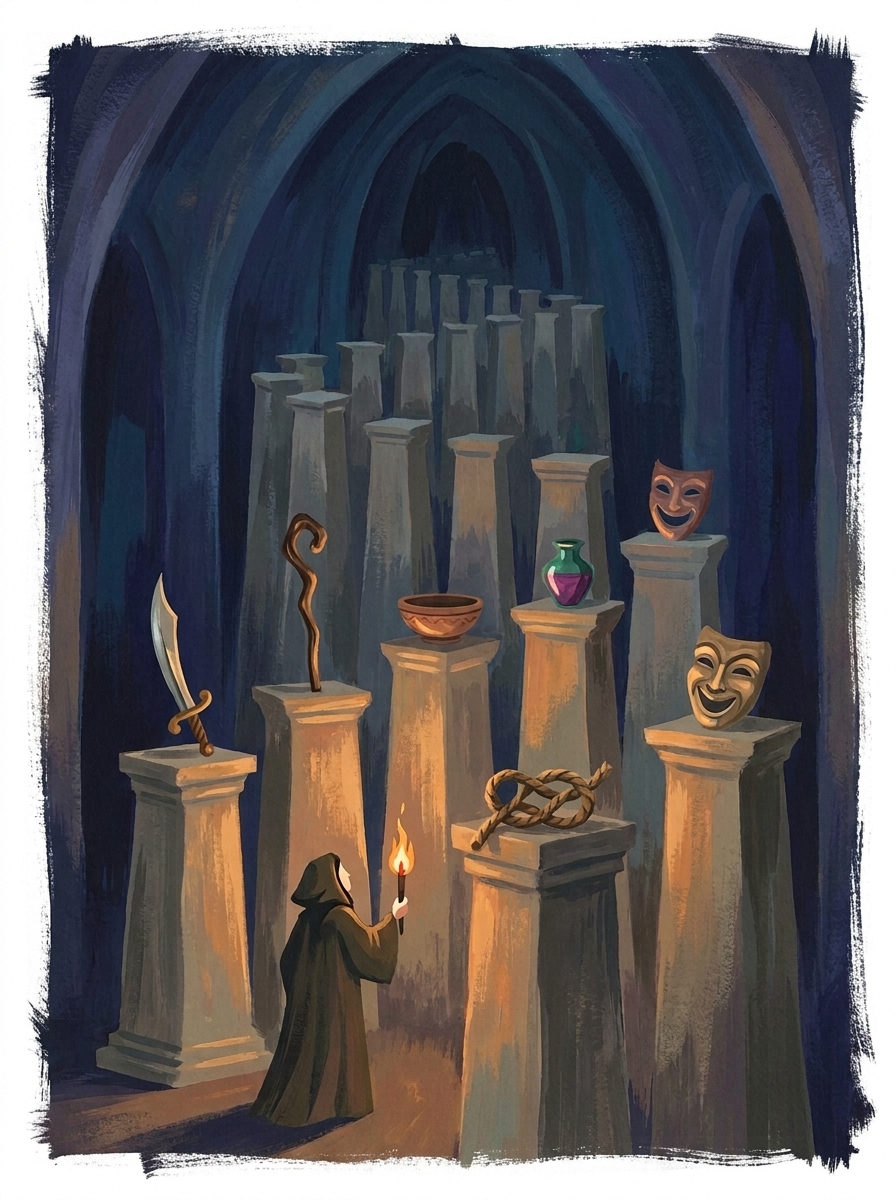
Chosen Shapes
12 chapters
Chapter 1 The Shield and the Sword What universal human cognition assembles the warrior archetype, and how do cultures then endlessly reshape its meaning and cost?
Chapter 2 The First Stone Every society tells a founder's story, a legitimizing myth that imposes order on chaos while obscuring the inherent violence and exclusion of its creation.
Chapter 3 The Wound That Teaches What if the enduring archetype of the healer demands a dangerous journey into suffering, where one must first be wounded to see?
Chapter 4 The Smallest Giant Beyond entertainment, underdog narratives activate a primal human system for fairness, satisfying our deep, non-rational craving for justice.
Chapter 5 The Laughing Knife Across mythologies, the trickster wields wit and deception to exploit power's blind spots, subverting rigid systems with a paradoxical blend of liberation and chaos.
Chapter 6 The Knowing That Becomes Why does the sage endure? Because true wisdom lies not in knowing facts, but in closing the gap between understanding and action within oneself.
Chapter 7 The Devotion That Transgresses What makes cultures honor the radical devotion of a lover as heroic, even when it means defying the social order?
Chapter 8 The Gift of the Body From mythic titans to fallen soldiers, how does a sacrificer's unique death transmute individual loss into indispensable collective gifts and profound cultural meaning?
Chapter 9 The Empty Hand The renunciate's paradoxical heroism reveals how cultures can find profound significance in rejecting all earthly striving to question life's core assumptions.
Chapter 10 The Sleeper and the Sword The returner, always about to arrive, harnesses deep human cognition and hope, becoming a politically volatile figure whose power lies in deferred restoration.
Coda The Catalogue and the Cost Our brains produce universal archetypes, but what happens when culture industrializes these figures, stripping them of their essential, transformative cost?