

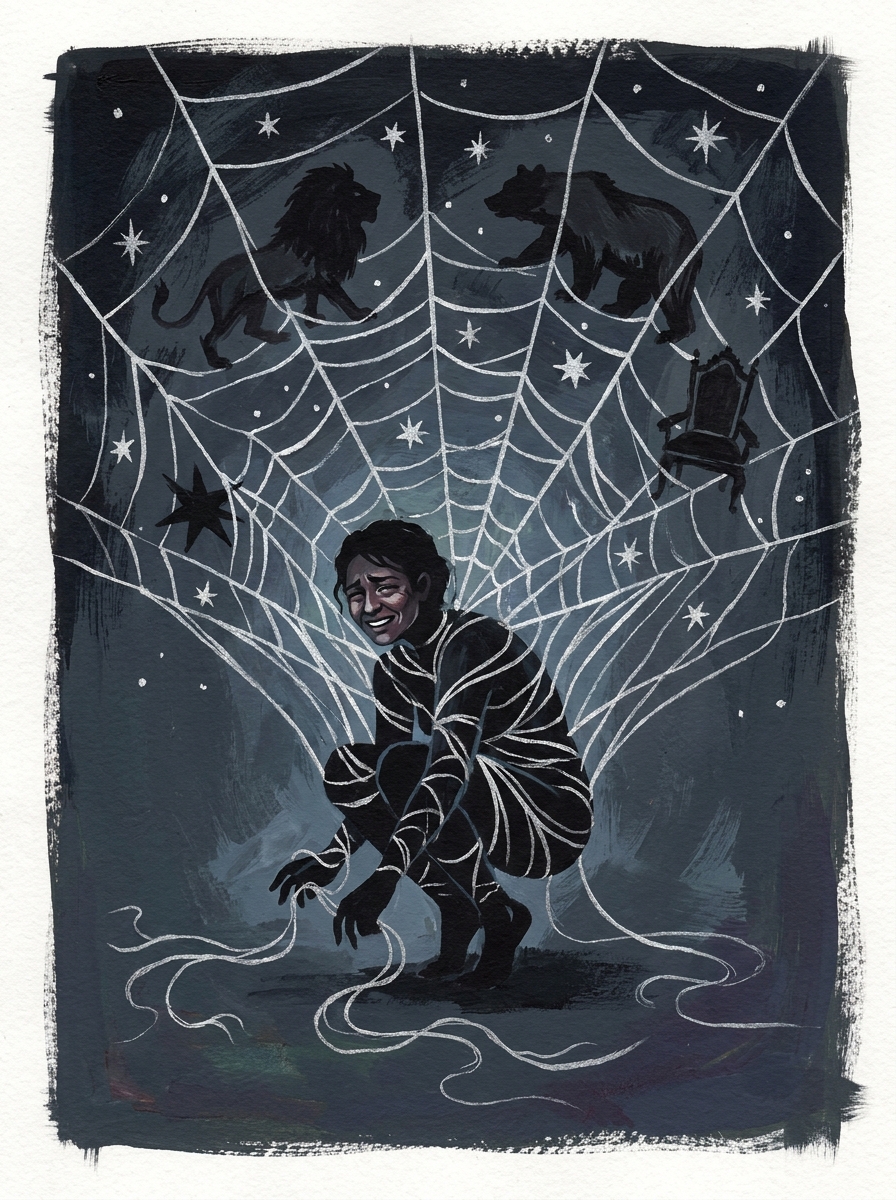
Anansi is a spider the size of a man's hand who defeats gods. He does not defeat them by being stronger. He defeats them by being smarter, by reading the gap between what the rules say and what the rules mean, and by living in that gap while everyone else assumes the gap doesn't exist.
The trickster is the figure who navigates power by refusing to fight on its terms. Where the warrior meets force with force and the founder meets chaos with structure, the trickster meets both with wit. The wit is not innocent. It is a weapon. And like all weapons, it cuts in more than one direction.
The Substrate
Theory of mind provides the engine. The ability to model what another person is thinking, to predict their responses, to understand that their map of the world differs from yours, is the cognitive prerequisite for every trick. You cannot deceive someone whose mind you cannot read. The trickster is theory of mind turned into an offensive capability.
Fairness intuitions provide the fuel, but inverted. Where the underdog's story satisfies the brain's desire for fair outcomes, the trickster's story satisfies a different desire: the desire to see rigidity punished. The trickster does not restore the ratio. The trickster exploits the system that set the ratio, and the exploitation is experienced as liberating by anyone who feels trapped by the system.
Coalition cognition gives the trickster its moral orientation, such as it has one. The trickster typically serves the smaller, weaker coalition. Anansi is a spider in a world of lions. Br'er Rabbit is a rabbit in a world of foxes and bears. Coyote is the wild dog against the settled powers. The trickster fights for the small, usually, but not always, and the "not always" is what makes the figure honest.
The Exemplars
Anansi, the spider of West African and Caribbean tradition, is perhaps the most structurally complete trickster in the world catalogue. He is small. He is clever. He lies, cheats, manipulates, and wins. He also fails spectacularly, often in the same story where he succeeds. The tradition refuses to purify him. He is the hero who steals all the stories from the sky god Nyame and gives them to the people. He is also the hero who gets caught in his own schemes and is humiliated by his own children. The dual nature is the point.
Coyote, across many Native American traditions, is simultaneously the creator and the fool. In Navajo stories, Coyote scatters the stars by accident, creating the Milky Way through clumsiness rather than design. In Pacific Northwest traditions, Coyote steals fire and gives it to the people. In Plains traditions, Coyote gets his head stuck in a skull and wanders blind until a meadowlark takes pity on him. The same figure, in the same tradition, can be responsible for the existence of death and for the beauty of the night sky. The trickster is not asked to be consistent.
The Monkey King, Sun Wukong, in the Chinese classic Journey to the West, fights his way through heaven, defeats the celestial army, and is finally trapped by the Buddha under a mountain for five hundred years. The trajectory is pure trickster: the small and clever figure takes on the entire cosmic hierarchy, wins for a while, and is eventually contained by a power that operates at a scale the trickster cannot reach. The containment is not the end of the story. Sun Wukong is released to serve as protector on a pilgrimage, and the pilgrimage is the structure within which his anarchic energy is finally directed toward something larger than itself.
Hermes, in his Greek aspect, is the god of thieves, travelers, messengers, and boundaries. He steals Apollo's cattle on the day he is born. He invents the lyre to get out of the punishment. The twin gestures, the theft and the creative gift that pays for it, are the trickster's signature. Hermes takes and Hermes gives, and the giving is as real as the taking.
Loki is the trickster who turns. He starts as the Norse gods' clever ally, the one who solves problems the rest of them are too straightforward to handle. He ends as the father of the wolf that eats the world. The arc is the trickster's implicit warning: cleverness that serves the group today can destroy it tomorrow. The same wit that frees the oppressed can enslave the gullible. The same tongue that tells the king the truth can tell the people a lie. Loki is the reminder that the trickster's loyalty is to the trick, not to the side.
The Variations
The liberator trickster appears in cultures under pressure. Anansi in the Caribbean is inseparable from the history of slavery. The spider who defeats the powerful through wit rather than force is the figure of resistance for a people who could not resist through force. Br'er Rabbit in the American South operates the same way. The stories traveled with the people, and the people needed the stories because the stories carried a form of power that the slaveholders could not confiscate.
The teaching trickster, whose failures are the lesson, is the version that operates as a moral compass by negative example. Coyote's disasters teach the audience what not to do. The trickster here is the sacrificial fool: the figure who suffers so the audience can learn without suffering. The comedy is the mechanism by which the teaching is made palatable.
The sacred clown, the Heyoka of Lakota tradition, the Koshare of Pueblo tradition, is the trickster operating within ritual. The clown does everything backward: rides horses facing the tail, wears clothes inside out, says the opposite of what they mean. The social function is relief. In cultures with strict codes of behavior, the sacred clown provides a sanctioned space for the violation of those codes, and the violation, paradoxically, reinforces the codes by making their boundaries visible.
The fool who tells the king the truth is the trickster in the court. Shakespeare's fools, Cervantes's Sancho Panza, the court jester across European and Asian traditions: the figure who is granted license to speak because the speaking comes wrapped in comedy. The king can tolerate the truth only when it comes from someone the king does not have to take seriously. The fool's weakness is the fool's credential.
The Honest Account
The romantic reading of the trickster is that it is a rebel figure, a voice of the powerless, a subversive who breaks unjust rules. And that reading is real. Anansi is genuinely a figure of resistance. The fool who tells the king the truth is genuinely speaking truth to power.
But the trickster does not care about justice. It cares about the exploit. This is the part the romantic reading consistently omits.
The same linguistic skill that frees the oppressed also enslaves the gullible. The same cleverness that dismantles an unjust system can dismantle a just one. The con artist is a trickster. The propagandist is a trickster. The demagogue who finds the gap between what the words say and what the audience hears is using the same cognitive tools Anansi uses to steal stories from the sky god.
Trickster heroes are less common in cultures that strictly valorize hierarchy and sincerity. Formal Confucian culture, Roman gravitas, Calvinist Protestantism: these traditions produce fewer tricksters or treat them as villains rather than heroes. The trickster clusters in cultures that need to relieve the pressure of rigid order. Its prevalence is diagnostic. A culture with many trickster stories is a culture with many rules and many people who feel suffocated by them.
To purify the trickster into a hero is to lose the warning. To purify it into a villain is to lose the liberation. The figure holds both, and the discomfort is the point.
The Craft Turn
The trickster story works when the wit has stakes. The trickster who never loses is decorative. The trickster who suffers the consequences of their own cleverness is permanent.
Anansi gets trapped in his own web. Coyote gets his head stuck in a skull. Loki is bound beneath a serpent that drips venom on his face until the end of the world. The suffering is not punishment in the moral sense. It is the figure's acknowledgment that cleverness is not the same as wisdom, and that the gap between the two is where the trickster lives and where the trickster pays.
The modern trickster problem is the frictionless version. The heist film where the plan works perfectly. The con-artist show where the audience cheers the deception because the mark "deserved" it. The figure without stakes is the figure without the warning, and the warning is half of what the shape was built to carry.
The Return
The trickster reveals that the human relationship with power is older and more sophisticated than obedience or revolt. The species learned to bend before it learned to build. The figure carries the bending.
It also carries the danger of the bending. The line between the liberator and the con is not a line the trickster respects. The figure crosses it freely, which is why the figure is necessary and why the figure is never safe.
The spider is still spinning. The question is what the web is for.
The Spider Who Beats Gods
Anansi is a spider the size of a man's hand who defeats gods. Not by being stronger. By being smarter. By reading the gap between what the rules say and what the rules mean, and living in that gap while everyone else pretends it doesn't exist.
The trickster is the figure who navigates power by refusing to fight on its terms. Where the warrior meets force with force, the trickster meets it with wit. The wit is not innocent. It's a weapon. And like all weapons, it cuts in more than one direction.
The Brain Behind the Trick
The trickster runs on theory of mind: the ability to model what another person is thinking and predict their responses. You can't trick someone whose mind you can't read. The trickster is theory of mind turned into an offensive tool.
The trickster also typically fights for the smaller, weaker side. Anansi is a spider in a world of lions. Br'er Rabbit is a rabbit in a world of foxes. Coyote is the wild dog against settled powers. The trickster fights for the small. Usually. But not always. And the "not always" is what makes the figure honest.
Tricksters Across the World
Anansi, from West African and Caribbean tradition, is the most complete trickster in the world catalogue. He lies, cheats, manipulates, and wins. He also fails spectacularly, often in the same story. The tradition refuses to clean him up.
Coyote, across many Native American traditions, is both creator and fool. In one story he scatters the stars by accident, creating the Milky Way through clumsiness. In another he gets his head stuck in a skull. The same figure creates beauty and suffers humiliation. The trickster is not asked to be consistent.
The Monkey King, Sun Wukong, fights his way through heaven and defeats the celestial army. Then he's trapped by the Buddha under a mountain for five hundred years. Released to protect a pilgrim, his anarchic energy is finally aimed at something larger than himself.
Loki starts as the Norse gods' clever ally. He ends as the father of the wolf that eats the world. The trickster's warning: cleverness that serves the group today can destroy it tomorrow.
The Part the Romantic Reading Misses
The romantic view says the trickster is a rebel, a voice of the powerless. And that's real. Anansi in the Caribbean is inseparable from the history of slavery. A figure of resistance for people who couldn't resist through force.
But the trickster doesn't care about justice. It cares about the exploit. The same cleverness that frees the oppressed can enslave the gullible. The con artist is a trickster. The propagandist is a trickster. The demagogue who finds the gap between what words say and what audiences hear is using the same tools Anansi uses to steal stories from the sky god.
Trickster heroes are rarer in cultures that value hierarchy and sincerity, like formal Confucian culture or Calvinist Protestantism. They cluster where people feel suffocated by rigid rules. A culture with many trickster stories is a culture with many rules and many people who feel trapped by them.
What Makes a Trickster Story Work
The wit has to have stakes. The trickster who never loses is decorative. The trickster who suffers their own cleverness is permanent.
Anansi gets trapped in his own web. Coyote gets his head stuck. Loki is bound beneath a venom-dripping serpent until the end of the world. The suffering isn't moral punishment. It's the figure's admission that cleverness isn't the same as wisdom.
Still Spinning
The trickster reveals that our relationship with power is older and more sophisticated than obedience or revolt. We learned to bend before we learned to build.
The line between the liberator and the con artist is not a line the trickster respects. The figure crosses it freely. That's why the figure is necessary, and why it's never safe.
The spider is still spinning. The question is what the web is for.